Is Yogyakarta safe? For most visitors, yes, with the ordinary precautions you would take in any busy city. The travel guides we read call it generally safe, and the problems that come up most are petty theft, tourist scams and traffic. The risk that is easy to miss is natural: the city sits within reach of Mount Merapi, which is at Alert Level III, and Java has earthquakes. This guide separates those risks, shows what official advisories say and lists habits that keep them small. It is general information, not official advice, so check your own government’s travel advisory before you book.
Is Yogyakarta safe for tourists? The short answer
Several guides describe Yogyakarta as one of the easier places to travel in Indonesia. AirAsia’s travel guide says it is generally safe but tells visitors to bring mosquito repellent, drink bottled water and stay alert in crowded spots. A safety guide for the city says violent crime is minimal and that the main nuisances are pickpockets and tourist-focused scams around Malioboro Street and popular attractions. That guide is a commercial site with hotel affiliate links, and we could not read its numerical safety score, so we treat it as a checklist rather than as measured data.
None of the pages we read gives crime statistics for tourists in Yogyakarta. That is why this article leans on official advisories for the big picture and on guides for local detail.
Official travel advisories for Indonesia
Australia’s Smartraveller advises visitors to exercise a high degree of caution in Indonesia overall because of security risks. Its page was marked as still current on 28 September 2026. New Zealand’s SafeTravel asks visitors to exercise increased caution and last updated its Indonesia page on 17 August 2026.
These are national ratings, not ratings for Yogyakarta. The higher levels on the Australian page apply to Papua provinces, which are far from Java. The Australian safety section lists risks that apply across Indonesia:
- terrorism, with popular tourist areas named as possible targets
- public protests and large events that can turn violent with little notice
- petty and violent crime, and drinks that may be spiked or contain toxic substances
- natural disasters such as earthquakes and volcanic eruptions
- unpatrolled beaches with strong currents, and adventure activities that need working safety equipment and insurance
Is Yogyakarta safe despite that rating? Read the rating as a reason to take ordinary precautions, not as a reason to cancel. If a protest is announced in the city during your stay, the advice is to avoid it and expect traffic delays.
Petty theft and scams in Yogyakarta
Crowds are where bags and phones go missing. Keep your phone out of back pockets, use a zipped bag in markets and on Malioboro Street, and carry only the cash you need for the day.
The scams reported by the safety guide are familiar ones:
- A friendly stranger mentions a special art exhibition that is open “today only” and leads you to a batik shop with high-pressure selling.
- Unofficial taxis refuse the meter and ask two to three times the normal fare. Some copy the colours of a legitimate company.
- A driver or operator quotes the standard temple entry fee but buys cheaper tickets and keeps the difference.
- Unofficial money changers short-change visitors or use rigged calculators.
In November 2025 the Keraton, the sultan’s palace, publicly addressed a related scam. Two visitors said they had been told the palace was closed, for example for six months of renovation, and were steered through a side entrance to a nearby museum and a batik gallery or shop. In one case the visitors bought a painting for about Rp500,000 (an estimate from the press reports). The Keraton said the people involved were not official guides, apologised to the visitors and said it was working with local authorities. Its advice was to ask for an official guide, check the guide’s identity and even photograph the guide’s card.
So is Yogyakarta safe from scams? Mostly, if you agree the price before a ride or service starts and confirm opening hours on the official page, not with a stranger.
Is Yogyakarta safe at night?
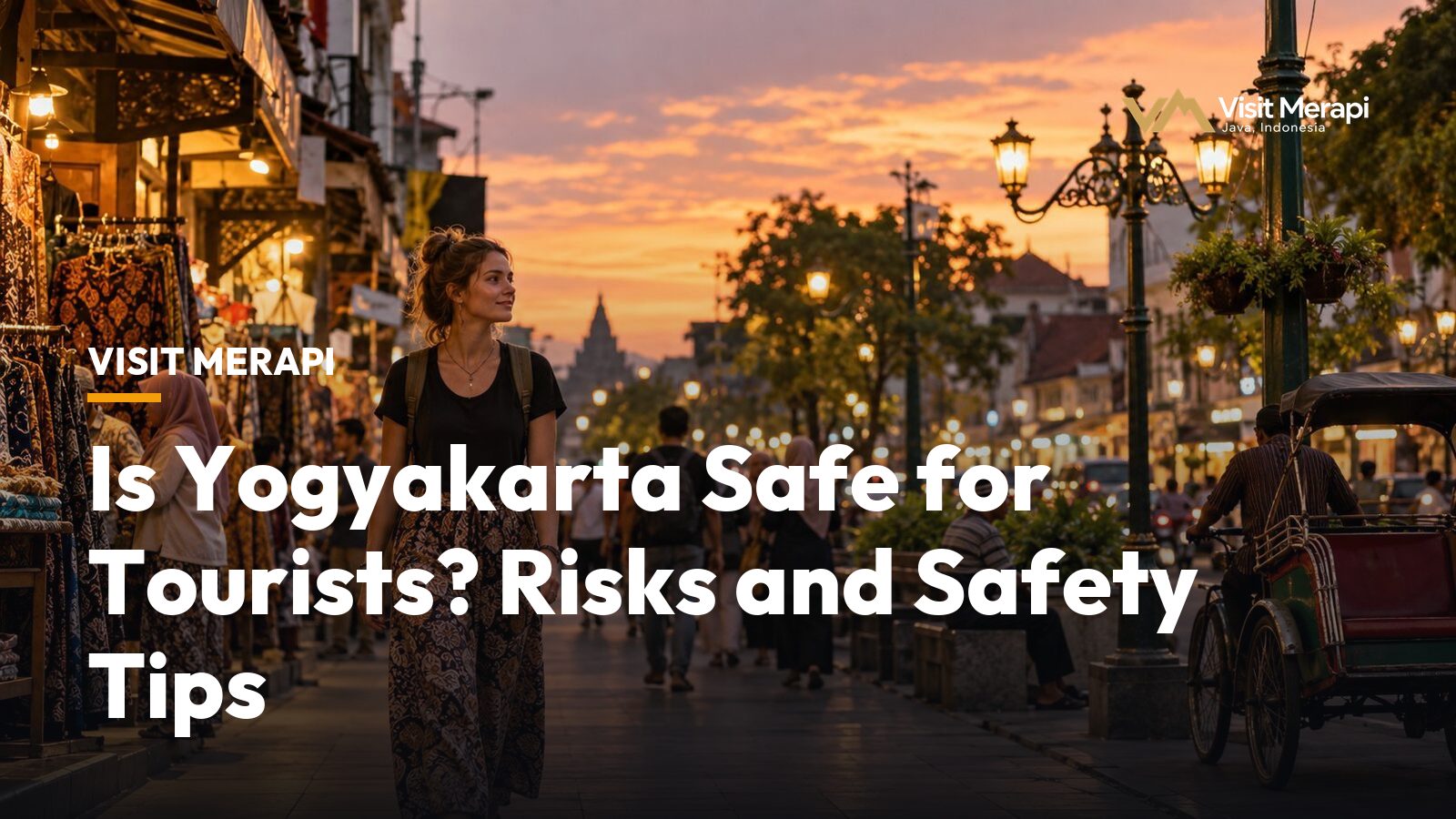
In the main tourist areas, evenings are lively. The safety guide describes Malioboro Street as busy and well lit, with food stalls and vendors, and suggests staying on busy, lit streets and avoiding poorly lit side streets after dark. It also says outer suburbs have less lighting, fewer transport options at night and less English spoken.
A sensible rule is to walk in the busy areas and take a ride-hailing app for any longer trip after dark. Grab and Gojek are described by that guide as the safest options because prices are clear and the trip is tracked. A community guide for women also advises against walking alone in deserted areas at night.
Yogyakarta safety for solo female travellers
Travel Ladies, a community site for women travellers, says Yogyakarta generally welcomes solo female travellers with warmth and respect and has a reputation for a high level of safety. It also notes that English is limited outside tourist areas and that society is conservative to some extent. Its practical advice is to avoid deserted areas at night, keep valuables safe and avoid public transport at night.
The Australian advisory points the other way for Indonesia as a whole. It says solo women are at higher risk of sexual assault, and asks travellers to be alert in taxis and rideshares, on public transport, in crowds and in bars. Is Yogyakarta safe for solo women, then? Both statements can be true: the city has a good reputation, and the national advice still applies. Dress modestly, keep your drink in sight, and share your ride details with someone when you use an app late.
Traffic and getting around
Traffic is the everyday hazard. The safety guide notes that motorbikes often ignore red lights, and that motorbike taxis booked by app are cheaper but less safe than cars. If you do take one, wear the helmet provided and skip it in heavy rain.
- Use Grab, Gojek or a driver you have booked rather than hailing unmarked cars.
- Cross roads at a steady pace and let riders steer around you.
- Check licence and insurance rules before renting a scooter. Is Yogyakarta safe for a first-time rider? Treat it as a place for experienced riders only.
- For long days to the temples or Merapi, a private driver removes the driving risk. Our Yogyakarta private day tour is built around that.
Is Yogyakarta safe from earthquakes and the volcano?
Two natural hazards define the region.
Mount Merapi. The volcano has been at Alert Level III (Siaga) since 5 November 2020, according to the Yogyakarta disaster agency. The national volcano service MAGMA still listed Merapi at Level III on 15 October 2026, with the summit clearly visible and thin white smoke about 100 metres above the crater. The ministerial rule quoted by the agency describes Level III as a clear increase in activity, or an eruption that threatens the area around the crater but not settlements. The Merapi national park’s website lists a 29 June 2026 notice about closing the summit climb.
Our guide to whether Mount Merapi is safe to visit and the explainer on Merapi alert levels go into detail.
The 2010 eruptions killed 386 people according to Wikipedia, led to more than 350,000 evacuations and dropped ash on Yogyakarta city. Status can change, so check the official report before a volcano day.
Earthquakes. The 27 May 2006 earthquake in Bantul, south of the city, had a magnitude of 6.4 and killed more than 5,700 people. Earthquakes occur regularly across Indonesia, as the Australian advisory says. Learn your hotel’s exits when you check in and follow staff instructions if shaking starts.
Rain. The Australian advisory gives the wet season as roughly October to April. The regional weather agency BMKG forecast on 2 October 2026 that the 2026/27 wet season would start more than 30 days later than normal and peak in February and March 2027. Our Yogyakarta rainy season guide covers planning for it.
Health, money and emergency numbers
- Water. Tap water is not safe to drink, according to the safety guide. Use bottled or filtered water.
- Mosquitoes. Dengue occurs in Indonesian cities, and the safety guide says the risk is highest in the rainy season. Use repellent.
- Insurance. Buy travel insurance that covers medical care and any adventure activity you plan, as Smartraveller recommends.
- Emergency numbers. Smartraveller lists 113 for fire, 118 for ambulance and rescue, 119 for medical emergencies and 110 or 112 for police.
A short safety checklist
- Use ride-hailing apps or booked drivers for transport after dark.
- Agree prices before a ride or service starts.
- Carry only the cash and cards you need for the day.
- Keep copies of your passport and insurance on your phone.
- Check the Merapi status and the weather before volcano or outdoor days.
- Save your hotel’s address in Indonesian and keep your phone charged.
So, is Yogyakarta safe to visit? On the evidence above, yes for most travellers who use ride-hailing or a driver, agree prices first and check Merapi and the weather before outdoor days.
If you are planning a short stay, our guides to one day in Yogyakarta and a 2-day Yogyakarta itinerary show how to fit the main sights in without rushing. If you would like a driver who knows the traffic, contact us with your dates and what you want to see. We will tell you what is realistic, and you can confirm prices and inclusions before you pay.